The Stream
Health for All: Promoting Wellbeing, Preventing Disease, Protecting Health
The Public Health stream explores the biological, psychological, behavioral, political, and economic determinants of human health. Each student grows to become their team’s expert on a specific research methodology and mechanism influencing their interdisciplinary research problem. Thus, the public health stream provides a great opportunity for students interested in biology, psychology, health sciences, sociology, economics, environmental studies, political science, math and many other fields.
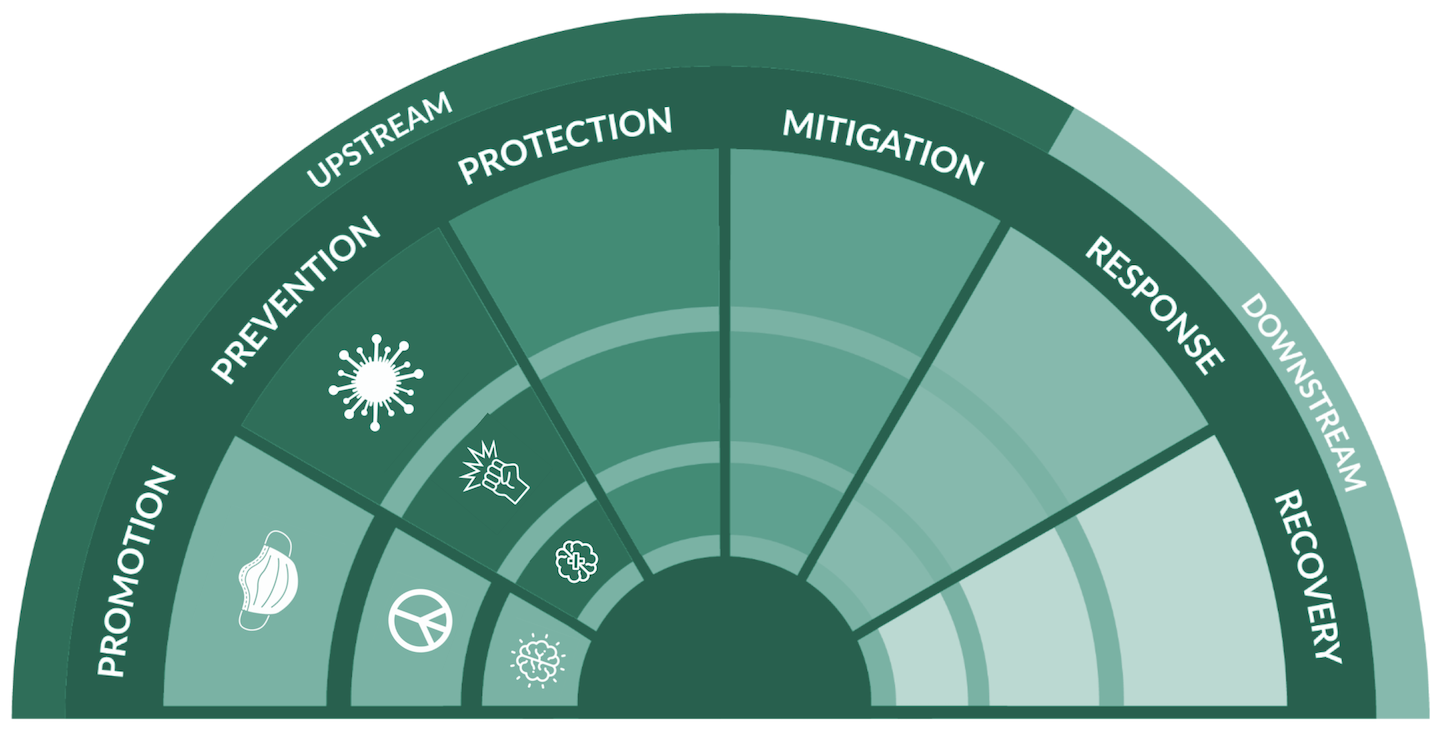
The field of public health targets health upstream before health problems require clinical care. For example, promoting mental wellbeing and preventing mental distress is more proactive than treating mental disorders. Community health can be improved by promoting safety and preventing violence rather than responding reactively or using punishment-oriented practices. Public and community health approaches use promotion and prevention, upstream, to address holistic health. Our research projects focus on applying the science of health promotion and prevention to cancer screenings, mental health, community violence, and food insecurity among college students, Broome County residents, and marginalized populations.
Research Themes
- Health Promotion
- Youth-Led Change
- Violence Prevention
- Mental Health
- Health Justice
Research Topics
- Mental Health Conceptions
- Lifestyle Mental Health
- Technology on Mental Health
- Social Determinants of Mental Health
- Stigma and Mental Health
Research Techniques
All students are trained to:
Generate an Institutional Review Board Protocol for human subjects research
Conduct ethical and responsible human subjects research
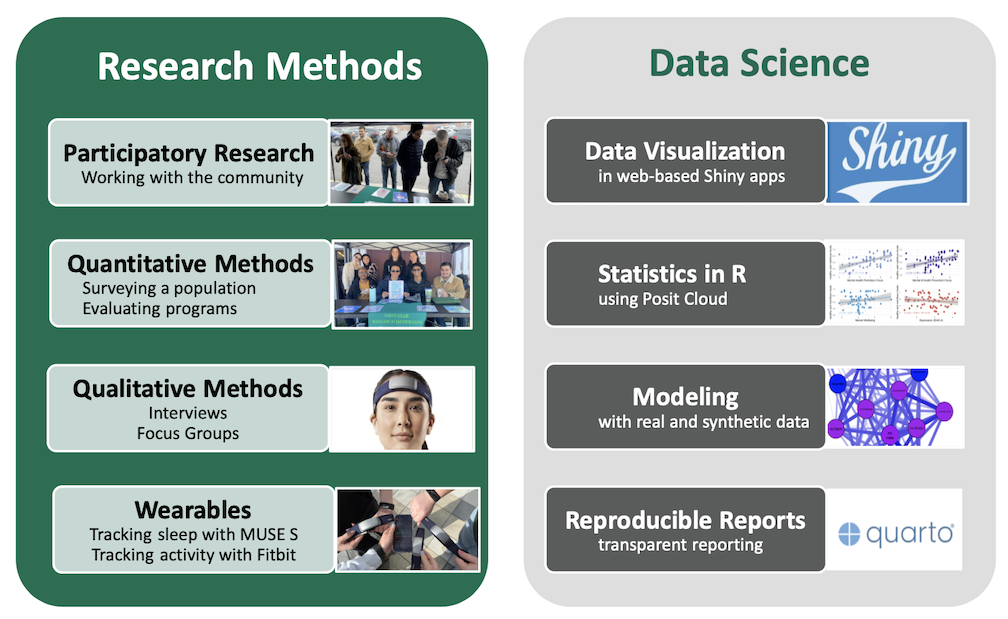
Construct a survey questionnaire via Qualtrics to collect human subjects data on various attitudes, beliefs, and self-reported behaviors
Develop flyers, videos, presentation materials, and other recruitment materials for in-person tabling and digital communication
Recruit Binghamton students and Broome County community members to participate
Analyze quantitative data using statistical methods and data visualization techniques in R OR analyze qualitative data using open-ended survey responses, interviews or focus groups
Write a team manuscript in markdown and publish reproducible scientific reports
Some students are trained to:
Collect and analyze psychophysiological data using MUSE S and Fitbits
Design and deliver a health promotion/prevention program by logic modeling and following other intervention mapping steps
Design an online experimental task
Conduct community-based, participatory research
Design, code, and publish a web-based Shiny application
Courses
The FRI-PH stream includes three sequential courses: Research Methods (HARP170), Community Health Research Methods I (ANTH206), and Community Health Research Methods II (ANTH306). In the stream, students produce five deliverables:
Team Poster using secondary data
Individual Literature Review
Team Study Proposal (with full IRB protocol)
Individual Scientific Report
Team Poster using primary data
Students learn qualitative, quantitative or mixed-methods techniques to answer two research questions for their individual report, which is their individual contribution to the team poster.
Course Resources
Life after FRI
After completing the FRI program, select students continue as peer mentors (to earn course credit in “Practicum in college teaching” or an independent study).